
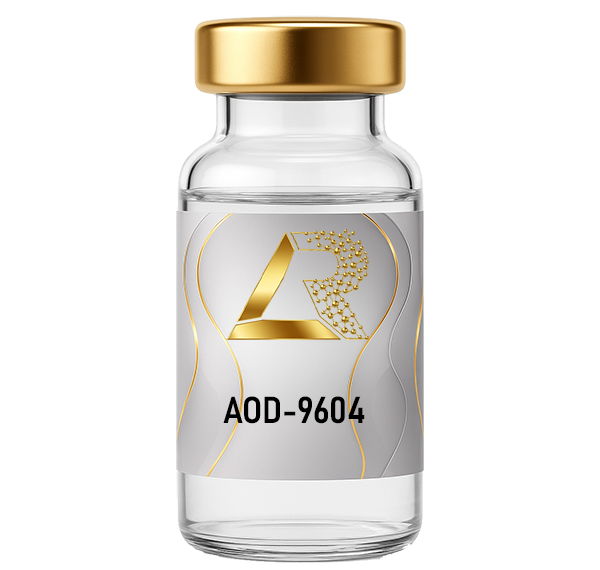
AOD-9604 5MG

AOD9604 is a small piece of the human growth hormone molecule that is specifically researched for its fat-burning properties. It is studied for its ability to help break down fat without causing the unwanted side effects of full growth hormone.

Original price was: $70.00.Current price is: $60.00.

The information provided on this page is intended solely as a general summary. It does not encompass all potential research applications, handling procedures, safety precautions, interactions, or observed effects. These products are supplied strictly for laboratory and research purposes only. They are not intended for human consumption, medical use, veterinary use, or diagnostic purposes. This information must not be considered a substitute for professional expertise, judgment, or regulatory guidance.

Money Back Guarantee

Guaranteed Quality

Fast Shipping

10+ Years Experience

Frequently Bought Together

Original price was: $70.00.Current price is: $54.00.
Original price was: $50.00.Current price is: $45.00.
Original price was: $125.00.Current price is: $79.20.
Original price was: $75.00.Current price is: $61.20.
Original price was: $320.00.Current price is: $239.40.
For 4 items

SEQUENCE/FORMULA

Sequence: Tyr-Leu-Arg-Ile-Val-Gln-Cys-Arg-Ser-Val-Glu-Gly-Ser-Cys-Gly-Phe Molecular Formula: C78H125N23O23S2

MOLECULAR WEIGHT

1817.1g/mol

PUBCHEM CID

91977218
  • Studying its potential to target and reduce body fat
  • Investigating its role in improving overall metabolism
  • Researching its effects on weight management without affecting blood sugar
  • Exploring its potential to help repair and regenerate cartilage
  • Analyzing its ability to support bone health and repair
AOD-9604 is a modified fragment of the C-terminus of human growth hormone (hGH), specifically corresponding to the amino acid residues 177-191. Its mechanism of action is designed to isolate the fat-reducing effects of hGH without the other, sometimes undesirable, effects of the full hormone, such as increasing IGF-1 levels or impacting insulin sensitivity. The proposed mechanism involves:
  • Stimulating Beta-3 Adrenergic Receptors: It is believed to act primarily on beta-3 adrenergic receptors, which are predominantly found on adipocytes (fat cells). This stimulation increases the rate of lipolysis, causing the cells to release stored fat.
  • Inhibiting Lipogenesis: AOD-9604 may also decrease the activity of enzymes involved in lipogenesis, thereby reducing the body's ability to store new fat.
Crucially, AOD-9604 does not appear to bind to the classical growth hormone receptor, which is why it does not significantly affect growth, IGF-1 levels, or carbohydrate metabolism. This selective action makes it a specific tool for studying fat metabolism.
  • Ng, F. M., et al. (2000). Metabolic studies of a synthetic lipolytic domain of human growth hormone. Hormone research in paediatrics, 53(6), 294-298.
  • Heffernan, M., et al. (2001). The effects of human GH and its lipolytic fragment (AOD-9604) on lipid metabolism following chronic treatment in obese mice and β3-AR knock-out mice. Endocrinology, 142(12), 5182-5189.
  • Stier, H., et al. (2013). Safety and tolerability of the hexadecapeptide AOD-9604 in humans. Journal of endocrinology and metabolism, 1(1), 1-10.
  • Kwon, D. R., et al. (2015). The effects of AOD-9604 on differentiation and proliferation of human adipose tissue-derived stem cells. Journal of Biomedical Science, 22(1), 1-9.