
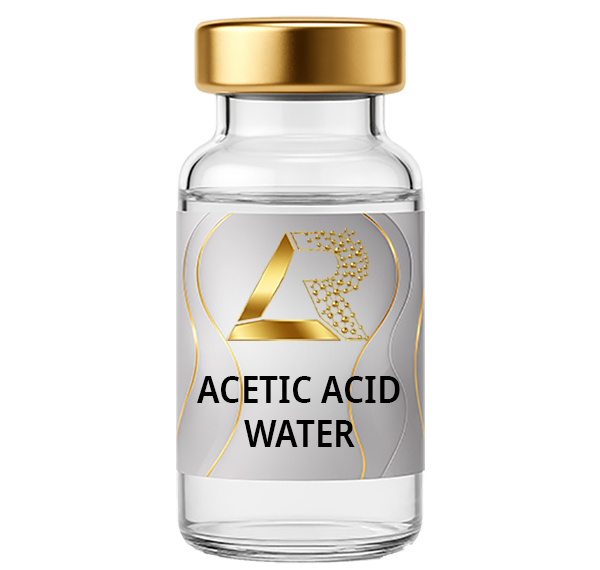
ACETIC ACID WATER 3ML

AA water is simply water with a small amount of Acetic Acid (vinegar) added, and it’s used to make peptide powders dissolve. Peptides are often basic or greasy, which makes them clump together (aggregate) in plain water. The acetic acid acts like a molecular crowbar by releasing positive charges (protons) that stick onto the peptide molecules. Since all the peptides now carry these extra positive charges, they repel each other, which breaks up the clumps and allows the entire powder to dissolve completely into a clear, usable liquid solution. This initial, concentrated AA water solution can then be safely diluted with a regular buffer for experiments or injections.

$10.00

The information provided on this page is intended solely as a general summary. It does not encompass all potential research applications, handling procedures, safety precautions, interactions, or observed effects. These products are supplied strictly for laboratory and research purposes only. They are not intended for human consumption, medical use, veterinary use, or diagnostic purposes. This information must not be considered a substitute for professional expertise, judgment, or regulatory guidance.

Money Back Guarantee

Guaranteed Quality

Fast Shipping

10+ Years Experience

Frequently Bought Together
$10.00
$50.00
Original price was: $110.00.Current price is: $90.00.
$18.00
Original price was: $188.00.Current price is: $168.00.
For 4 items

SEQUENCE/FORMULA

C2​H4​O2​ (or CH3​COOH)

MOLECULAR WEIGHT

60.05 g/mol

PUBCHEM CID

176
  • Dissolving Basic Peptides: Dilute aqueous acetic acid (e.g., 10-25%) is frequently used as a solvent to reconstitute lyophilized (freeze-dried) basic peptides (those with a net positive charge, high content of basic amino acids like Arginine, Lysine, or Histidine). The acidic environment helps to protonate the basic side chains, increasing their charge and improving solubility in aqueous solutions.
  • Enhancing Stability: Mild, buffered acetic acid solutions (e.g., 0.6%) can be used to improve solubility and maintain the pH balance of long-chain peptides, enhancing their stability for research in controlled lab environments
  • Mechanism: Acetic acid acts as a weak acid to protonate basic residues (Lys, Arg, His) and the N-terminus of basic peptides, increasing the net positive charge on the molecule.
    • This charge repulsion between peptide molecules counteracts hydrophobic aggregation and facilitates the peptide's dissolution in aqueous or semi-aqueous solvents.
  • Application: Reconstitution of lyophilized basic or highly hydrophobic peptides.
  • Reference: Tocris Bioscience, Peptides: Solubilization and Storage; Sigma-Aldrich, Solubility Guidelines for Peptides.