
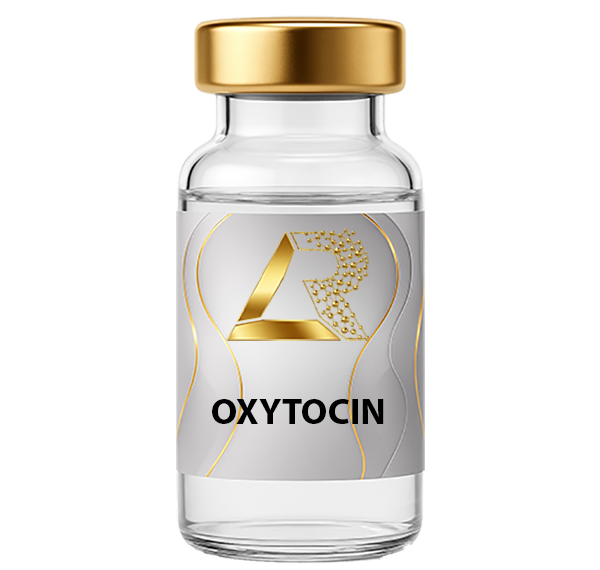
OXYTOCIN

Oxytocin is often called the “love hormone” or “social bonding chemical,” but its role is much broader than just making us feel warm and fuzzy. It is a peptide produced in the brain (specifically the hypothalamus) that acts as both a hormone and a neurotransmitter.


Specifications:
• Quantity: 2mg
• Storage: -20°C, lyophilized
• Purity: >99% (HPLC)

$48.00

The information provided on this page is intended solely as a general summary. It does not encompass all potential research applications, handling procedures, safety precautions, interactions, or observed effects. These products are supplied strictly for laboratory and research purposes only. They are not intended for human consumption, medical use, veterinary use, or diagnostic purposes. This information must not be considered a substitute for professional expertise, judgment, or regulatory guidance.

Money Back Guarantee

Guaranteed Quality

Fast Shipping

10+ Years Experience

Frequently Bought Together

Original price was: $48.00.Current price is: $43.20.
Original price was: $60.00.Current price is: $54.00.
Original price was: $70.00.Current price is: $58.50.
Original price was: $185.00.Current price is: $130.50.
Original price was: $363.00.Current price is: $286.20.
For 4 items

SEQUENCE/FORMULA

Sequence: Cys-Tyr-Ile-Gln-Asn-Cys-Pro-Leu-Gly-NH2 Molecular Formula:

MOLECULAR WEIGHT

1007.2 g/mol

PUBCHEM CID

439302
  • Creating Bonds: It is widely studied for how it helps people feel "connected," like the bond between a mother and her baby or between close friends.

  • Helping with Birth: In the medical world, it's used to help start labor or to help the body recover after a baby is born.

  • Lowering Stress: Scientists look at how it can calm the brain down and make people feel less anxious when they are around others.

  • Social Behavior: It’s being researched to see if it can help people who find it difficult to read social cues or feel comfortable in groups.

  • The Key and Lock: Think of oxytocin as a "key" that travels through your body. It only works when it finds its specific "lock" (called a receptor) on a cell.

  • Sending a Signal: Once the key turns the lock, it sends a message to the cell to perform a task, like telling a muscle to contract or telling the brain to feel safe.

  • Changing the Vibe: It works by dampening the "fight or flight" part of your brain, essentially acting as a natural dimmer switch for stress.

1. General Discovery and Structure

  • Du Vigneaud, V., et al. (1953). "The sequence of amino acids in oxytocin, with a proposal for the structure of oxytocin." Journal of Biological Chemistry.

    • Note: This is the landmark paper that first identified the chemical sequence you requested earlier.

2. Research Applications (Social Bonding & Stress)

  • Carter, C. S., et al. (2020). "Is oxytocin nature's medicine?" Pharmacological Reviews.

    • Focus: A comprehensive look at how oxytocin affects social behavior, trust, and its potential as a medical treatment.

  • Taylor, S. E. (2011). "Tend and Befriend Theory." UCLA Social Neuroscience Lab.

    • Focus: Explains the mechanism of how oxytocin helps humans respond to stress through social affiliation instead of just "fight or flight."

  • Yamasue, H., et al. (2012). "Integrative approaches utilizing oxytocin to enhance prosocial behavior: from animal and human social behavior to autistic social dysfunction." Journal of Neuroscience.

    • Focus: Research into using oxytocin to help with social cues and social processing.