
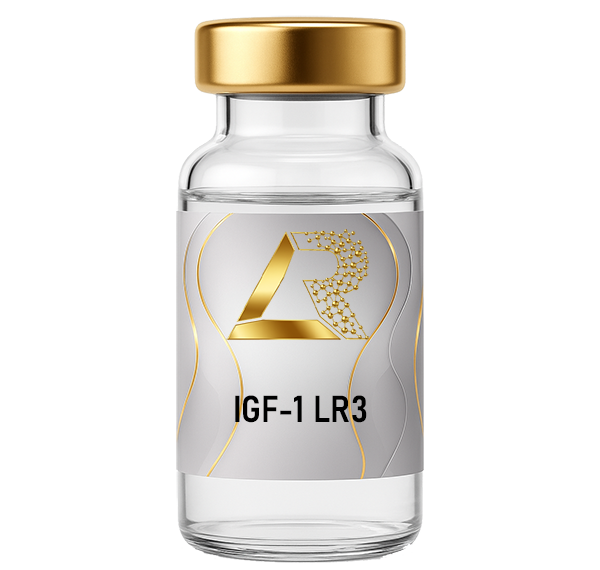
IGF-1 LR3 1MG

IGF-1 LR3 is a long-acting analog of Insulin-like Growth Factor-1. It has been modified to prevent binding to IGF-binding proteins, thus increasing its bioavailability and half-life for research into cellular growth and proliferation.

Original price was: $120.00.Current price is: $90.00.

The information provided on this page is intended solely as a general summary. It does not encompass all potential research applications, handling procedures, safety precautions, interactions, or observed effects. These products are supplied strictly for laboratory and research purposes only. They are not intended for human consumption, medical use, veterinary use, or diagnostic purposes. This information must not be considered a substitute for professional expertise, judgment, or regulatory guidance.

Money Back Guarantee

Guaranteed Quality

Fast Shipping

10+ Years Experience

Frequently Bought Together

Original price was: $120.00.Current price is: $81.00.
Original price was: $50.00.Current price is: $45.00.
Original price was: $110.00.Current price is: $81.00.
Original price was: $110.00.Current price is: $90.00.
Original price was: $390.00.Current price is: $297.00.
For 4 items

SEQUENCE/FORMULA

Sequence: MFPAMPLSSL FVNGPRTLCG AELVDALQFV CGDRGFYFNK PTGYGSSSRR APQTGIVDEC CFRSCDLRRL EMYCAPLKPA KSA Molecular Formula: C400H625N111O115S9  

MOLECULAR WEIGHT

9117.5 g/mol

PUBCHEM CID

144882199
  • Studying its role in stimulating muscle cell proliferation (hyperplasia)
  • Investigating its effects on nitrogen retention and protein synthesis
  • Analyzing its potential for tissue repair and regeneration in various cell types
  • Researching its impact on glucose metabolism and insulin sensitivity
  • Exploring its use in cell culture to promote growth and differentiation
  • Like natural IGF-1, IGF-1 LR3 binds to and activates the IGF-1 receptor (IGF-1R), initiating a cascade of intracellular signaling that promotes cell growth, proliferation, and survival.
  • Its primary advantage comes from two key modifications:
  1. Arginine Substitution: The substitution of Arginine for Glutamic acid at position 3 dramatically reduces the molecule's affinity for Insulin-like Growth Factor-Binding Proteins (IGFBPs).
  2. N-Terminal Extension: The additional 13 amino acids at the N-terminus also contribute to reduced IGFBP binding.
  • In the body, IGFBPs bind to natural IGF-1, holding it in reserve and regulating its activity. By avoiding this binding, IGF-1 LR3 remains free and more bioavailable to bind to IGF-1 receptors on cells, making it significantly more potent and extending its circulating half-life to several hours.
Tomas, F. M., et al. (1992). Increased weight gain, nitrogen retention and muscle protein synthesis in diabetic rats infused with insulin-like growth factor-I (IGF-I). The Biochemical Journal, 282(1), 91–97. Francis, G. L., et al. (1992). The relative binding of insulin-like growth factors I and II and their variants to the type 1 and type 2 insulin-like growth factor receptors. The Journal of Biological Chemistry, 267(27), 19084-19091. Barton, E. R. (2006). The ABCs of IGF-I: a primer on the role of the IGF-I signaling pathway in muscle growth. Journal of Applied Physiology, 101(4), 1278-1284. O'Connor, J. C., et al. (2005). Long-R3-IGF-I reduces expression of proteins of the ubiquitin-proteasome proteolytic pathway in rodent skeletal muscle. Endocrinology, 146(4), 1730-1738.